Use Case
Demand-Driven Production Planning & Inventory Optimization
The Planning Challenge
Petit Bateau is a well-established apparel brand for babies and children, with product teams based in Troyes, France. Its supply chain combines integrated manufacturing and global sourcing, managing production from yarn to finished garments while distributing products worldwide.
In a fashion market characterized by short product life cycles and volatile demand, ensuring product availability while controlling inventory exposure became increasingly complex.
At the same time, the brand began transitioning from a traditional seasonal planning model toward a demand-driven production strategy, requiring faster in-season responsiveness and closer alignment between sales signals and manufacturing decisions.
Results at a Glance
- 50% reduction in planning cycle time
- 5–8% reduction in end-of-season remaining stock
- 3-week reduction in time-to-market for in-season replenishment
- Faster response to demand signals
The Operational Environment
Petit Bateau operates a complex apparel production network combining integrated manufacturing and global sourcing.
Its operations include:
- Multi-stage planning across yarn, fabrics, and finished goods
- Around 26,000 SKUs per year
- Approximately 100,000 products shipped daily
In this environment, planning decisions directly influence product availability, factory stability, and inventory levels across the supply chain.
The Transformation
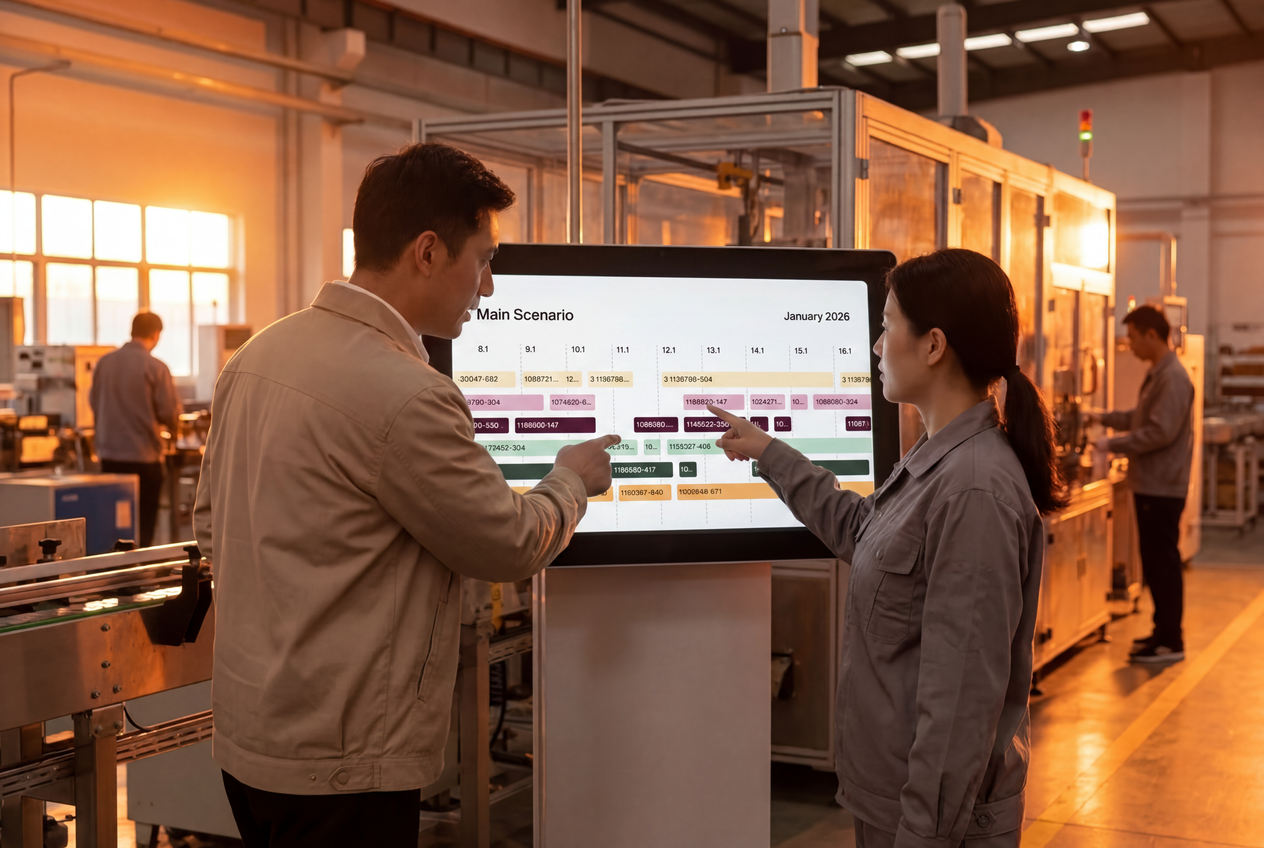
Petit Bateau partnered with Sunstice to modernize production planning and inventory management across its manufacturing network.
By connecting demand signals, production constraints, and inventory decisions through integrated planning, the company improved how supply decisions adapt to evolving demand patterns.
This enabled planning to move from rigid seasonal forecasting toward more responsive, demand-driven supply coordination.
Customer Perspective
“The most crucial improvement provided by the Sunstice platform is the responsiveness we developed over the last three years, enabling us to produce a good sales performer in six weeks.”
Thibault Beckers
Head of Planning & Procurement, Petit Bateau
Structured Agility™ in Action
Petit Bateau’s transformation illustrates Structured Agility™, Sunstice’s operating framework for planning in environments of demand volatility and short product life cycles.
By improving how demand signals interact with production and inventory decisions, the brand strengthened its ability to adapt production plans while maintaining operational stability.
Planning decisions can now evolve continuously during the season while maintaining control over manufacturing performance.









































.webp)




.webp)

.webp)
.webp)
.webp)
.webp)