The Problem: Static Schedules Cannot Keep Up
Manufacturing operations are under constant pressure.
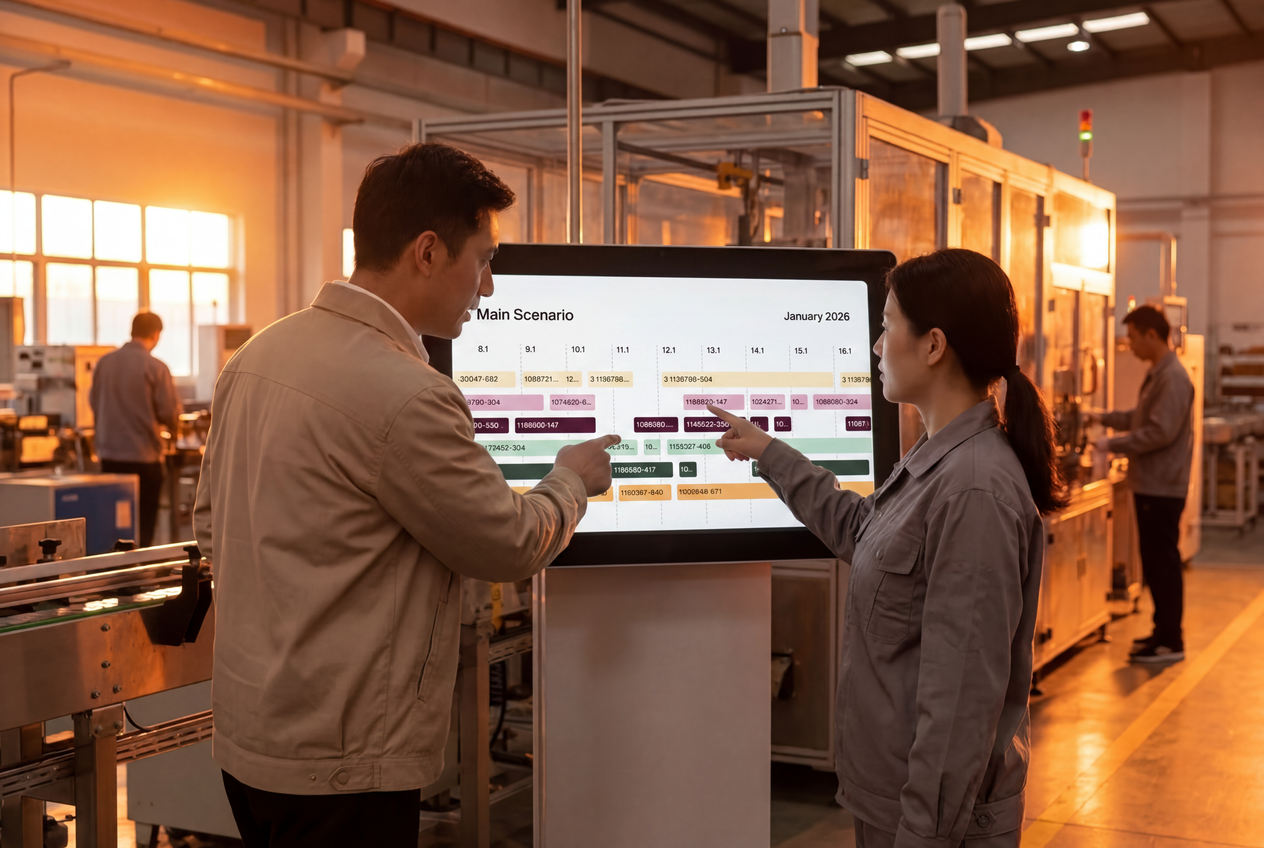
Demand changes quickly. Materials arrive late. Machines go down. Labor, tooling, capacity, and production priorities shift throughout the day. Yet many scheduling processes still rely on fixed plans and manual adjustments.
This creates a gap between what was planned and what can actually be executed.
When schedules become outdated too quickly, planners spend more time reacting to disruption than optimizing production. The impact is felt across service levels, resource utilization, production costs, and operational stability.
The Shift: From Fixed Plans to Adaptive Scheduling
Production scheduling must become more dynamic.
When scheduling is built for change, manufacturers can update production sequences, resource allocation, and operational priorities as conditions evolve without losing control. It connects planning decisions with shop floor reality, helping teams respond faster without losing control.
This requires more than automation. It requires the ability to model constraints, simulate alternatives, and optimize decisions across competing objectives such as cost, service, utilization, and stability.
Within the Structured Agility™ operating framework, scheduling becomes the execution layer that turns plans into feasible production flows.
Why It Matters
A production plan only creates value when it can be executed.
Scheduling helps manufacturers respond to operational change while protecting performance. It enables teams to reduce inefficiencies, improve utilization, limit unnecessary disruption, and keep production aligned with demand.
In volatile manufacturing environments, scheduling is no longer just an operational task. It is a lever for resilience, efficiency, and competitiveness.








































.webp)






.webp)

.webp)
.webp)
.webp)
.webp)